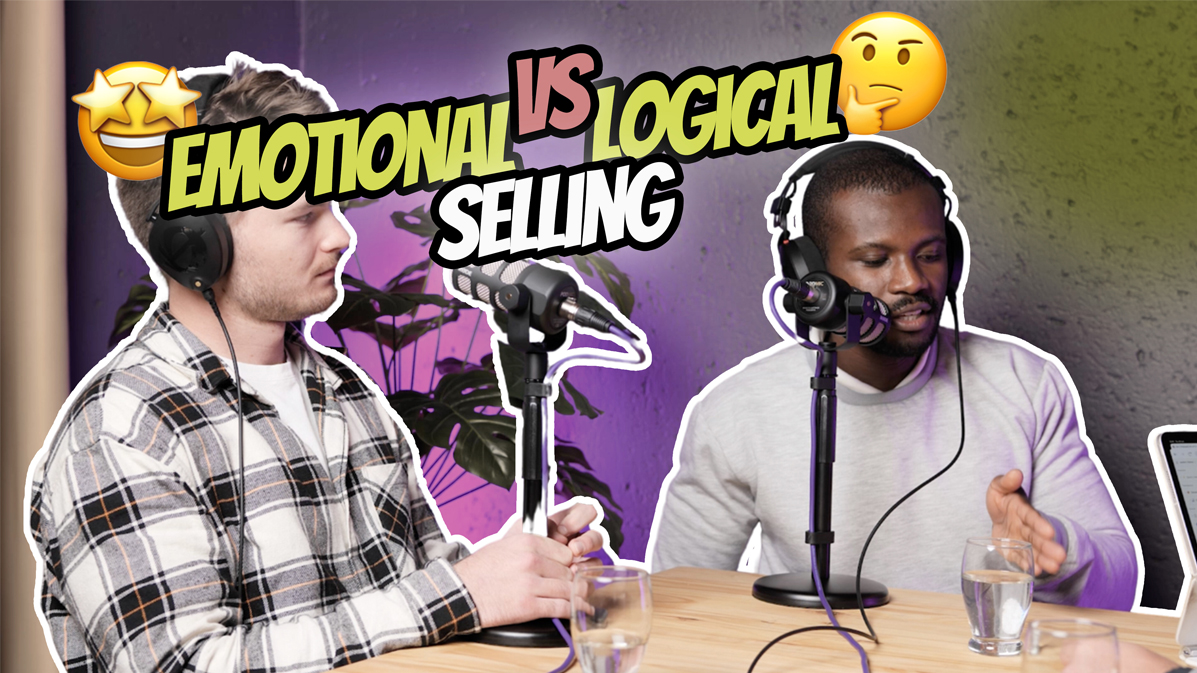
Short version. People buy on feeling, then use logic to convince themselves it was a smart call. Emotional selling creates the want. Logical selling gives the buyer the reasons to act on it. Emotion opens the door, logic stops them walking back out. You need both, but emotion has to lead. Harvard Business School professor Gerald Zaltman, in his book How Customers Think, found that 95% of buying decisions happen in the subconscious mind, where emotion runs the show. At V8 Media we have run campaigns for 500+ businesses and tracked over R2 billion in sales, and the ads that win almost always sell the feeling first and the facts second.
Most business owners sell backwards.
They lead with the spec sheet. The features. The price. All the logical stuff.
Then they wonder why nobody bites.
The problem is simple. Logic does not move people. Feeling does. And once you understand the order things happen in the buyer's head, you stop arguing with people and start selling to them.
Below I will break down the difference between emotional and logical selling, what the science actually says, and how to use both so more people say yes.
What is emotional vs logical selling?
Logical selling talks to the head. Emotional selling talks to the gut.
Logical selling is the facts. Price, features, specs, warranties, comparisons. It answers the question "does this make sense?"
Emotional selling is the feeling. The relief, the pride, the status, the fear of missing out, the picture of an easier life. It answers a different question. "Do I want this?"
Here is the part that trips people up. The two are not equals fighting for the sale. They have an order. The want comes first. The reasons come second.
Think about the last big thing you bought. A car. A holiday. A new phone. You felt the pull first. Then your brain went hunting for sensible reasons so you did not feel silly spending the money.
That is emotional selling and logical selling working as a team. One opens the door. The other closes it.
Do people actually buy on emotion or logic?
Emotion. By a mile. And this is not a marketing slogan, it is settled science.
Start with Antonio Damasio, a neuroscientist who studied people with damage to the emotional part of the brain. In his book Descartes' Error, he describes patients who could still reason perfectly. Their IQ was fine. But with no emotion, they could not make even tiny decisions. Picking a time for an appointment could take them half an hour.
Read that again. Strip out emotion and the buyer cannot choose. No feeling, no decision. That is how central emotion is to every yes.
Then there is Daniel Kahneman, a psychologist who won the Nobel Prize in economics for his work on how people really make decisions. In Thinking, Fast and Slow he splits the mind into two systems. System 1 is fast, automatic, and emotional. System 2 is slow, effortful, and logical.
System 1 runs the show. It reacts before System 2 has even woken up. By the time the logical brain weighs in, the gut has usually already decided.
And Gerald Zaltman from Harvard puts a number on it. He found that 95% of buying decisions happen subconsciously, below the level of conscious, logical thought. We like to believe we are rational shoppers. We are mostly feeling shoppers who tell ourselves a rational story afterwards.
People buy on emotion and justify with logic. Sell to the head alone and you are talking to the 5% while the 95% that actually decides has already scrolled past.


Emotional selling vs logical selling: the honest comparison
Both have a job. The trick is knowing which one does what, and in what order.
| Factor | Logical selling | Emotional selling |
|---|---|---|
| What it talks to | The head | The gut |
| The message | "Here are the features and the price" | "Here is the life you get" |
| The question it answers | "Does this make sense?" | "Do I want this?" |
| Speed | Slow, the brain has to work | Instant, it is a gut reaction |
| What it creates | Permission to buy | The desire to buy |
| When it works alone | Almost never, no desire | Risky, buyer feels guilty later |
| Its real job | Justify the decision after the fact | Make the decision in the first place |
See the bottom row. That is the whole thing.
Emotion makes the decision. Logic defends it. Lead with logic and there is no decision to defend yet, so the facts just sit there doing nothing.
Why emotion wins, but logic still matters
Emotion gets the buyer leaning in. But drop the logic and you have a problem.
Without a logical reason, the buyer feels reckless. They get the want, then a little voice says "you are being silly," and they pull back. The sale dies at the last second.
This is why so many people add a product to the cart and then bail. The emotion got them there. Then nothing gave them permission to actually pay.
Logic is the permission slip. It is what the buyer shows themselves, and their partner, so the purchase feels responsible instead of impulsive.
"It is more fuel efficient." "It will save me time every week." "It comes with a 2-year guarantee." Those lines do not create the want. They protect it. They stop the want from leaking away on the drive home.
So the formula is not emotion instead of logic. It is emotion first, logic second. Spark the feeling, then arm the buyer with the reasons.
How to sell to emotion first
This is the skill. You are not changing the product. You are changing what the buyer feels when they look at it.
Here are the levers we pull on almost every campaign.
1. Sell the outcome, not the thing. Nobody wants a treadmill. They want to feel good in a mirror. Nobody wants accounting software. They want to stop lying awake about SARS. Paint the after, not the object.
2. Tell a story. Facts inform. Stories make people feel. A short story about one real customer beats a wall of features every time, because the buyer pictures themselves in it.
3. Use the strong emotions. The ones that move money are fear of loss, desire for status, the need to belong, and relief from a pain. Find which one your customer feels and speak straight to it.
4. Make them feel it now. "Imagine waking up Monday with no stock left to ship." Put the buyer inside the result before they have paid for it. Felt desire beats described desire.
5. Remove the fear. The biggest emotion blocking a sale is the fear of making a bad call. A guarantee or a free trial takes that fear off the table, so the want has nothing holding it back.
You are talking to the part of the brain that actually decides. That is not manipulation. That is just how buying works. We pull these exact levers when we write your Meta ads, because on a feed you have under a second to make someone feel something before they scroll.
A R600 example of emotion vs logic
Let me make this real with money, the way we always do.
Say you sell running shoes for R600.
The logical pitch goes like this. "Mesh upper, 8mm drop, carbon plate, 240 grams, breathable lining." All true. All boring. The buyer nods and keeps scrolling.
The emotional pitch goes like this. "The shoe that makes your morning run feel effortless. Lace up, hit the road, and finish faster than last week, feeling lighter on your feet than you have in years."
Same shoe. Same R600. One sells the spec. One sells the feeling of being fitter and faster.
Now here is the clever bit. After the emotional pitch, you add the logic. "Carbon plate for the spring back. Breathable mesh so your feet stay cool past 10km. 30-day return if they are not perfect."
The feeling made them want it. The specs let them justify the R600 to themselves. That is the one-two punch. Most sellers throw only the first jab, the boring one, and wonder why nobody buys.
How emotion and logic show up in your marketing
Every ad that has ever worked is built on this.
The headline and the image hit the emotion. The fine print and the bullet points carry the logic. Order matters. Feeling at the top, facts lower down.
It is the same on a sales page. You open with the dream, the pain, the transformation. Then, further down, you stack the features, the FAQs, and the guarantee for the buyer who needs the proof before they commit.
It runs through your whole funnel too. A cold Google Ads search is closer to logic, because the person already knows what they want and is comparing. A Facebook feed is pure emotion, because you are interrupting someone who was not even shopping. Same product, different mix, depending on where the buyer's head is.
This is also why clever, clever marketing so often flops. It entertains the head and forgets the gut. We unpack that trap in why clever marketing doesn't work.
And it is why the first few seconds of any ad matter so much. You have to land the feeling before the logical brain has time to object, which we cover in get them to think this in the first 5 seconds.
Does emotional selling work for serious, expensive, or B2B purchases?
Yes. Maybe even more.
People assume big or business purchases are pure logic. They are not. A business owner buying R200,000 of software still feels fear of getting it wrong, pride in fixing the problem, and relief at looking good to the boss.
The emotions are just quieter and dressed up in serious clothes. Safety. Certainty. Status. Trust.
So a B2B pitch still leads with the feeling. "Stop the late-night fire drills." Then it backs it up hard with the logic, the ROI numbers, the case studies, because a bigger spend needs a bigger permission slip.
The price tag does not change the rule. It only changes how much logical proof you need to stack behind the feeling. This is the same idea behind the price vs value equation, where the want has to beat the number before anyone buys.
How V8 Media builds emotion and logic into your marketing
We are a performance agency. If your campaign does not grow the business, we have a problem. So we obsess over this exact balance.
Most SA business owners we sit across from are selling on spec and losing on feel. Same product as the shop down the road, half the desire.
Every campaign starts with one question. What does this customer feel, and what do they secretly want? Get that wrong and no clever headline saves you.
Then we build the message to spark the feeling first, and we load the logic right behind it so the buyer can say yes without second-guessing. That is the engine behind our Meta ads and Google Ads work.
The sale almost never happens on one ad. It happens across a journey. Cold scroll to warm interest to booked call. Our AI lead generation system keeps the feeling alive and the facts close, so the buyer never runs out of reasons to say yes. That is the job.
If you want the deeper science on why this works, we wrote a plain-English guide on what neuromarketing actually is. Start there.
Five hundred businesses. R2 billion in sales tracked. The brands that win sell the feeling first. The ones that struggle keep shouting features at people who have already stopped listening.
Frequently asked questions
What is the difference between emotional and logical selling?
Logical selling talks to the head with facts like price, features, and specs, answering the question "does this make sense?" Emotional selling talks to the gut with feelings like relief, status, and fear of missing out, answering "do I want this?" The key is the order. Emotion creates the desire to buy, and logic then justifies the decision so the buyer feels responsible rather than reckless. You need both, but emotion has to lead.
Do people really buy on emotion instead of logic?
Yes, and it is backed by science. Harvard professor Gerald Zaltman found that 95% of buying decisions happen subconsciously, where emotion dominates. Neuroscientist Antonio Damasio showed that people with damage to the emotional part of the brain could reason fine but could not make even simple decisions. Daniel Kahneman's research splits the mind into a fast, emotional System 1 and a slow, logical System 2, and System 1 usually decides first. People buy on emotion, then justify with logic.
If emotion drives the sale, why do I still need logic?
Because logic is the permission slip. Emotion creates the want, but without a logical reason the buyer feels reckless and pulls out at the last second. The facts, the guarantee, and the ROI give them a sensible story to tell themselves and their partner, so the purchase feels responsible. Skip the logic and the want leaks away before they pay. Spark the feeling first, then arm them with the reasons.
How do I sell to emotion without being manipulative?
You are not tricking anyone, you are talking to the part of the brain that actually decides. Sell the outcome instead of the features, tell a real customer story, speak to a genuine pain or desire, help the buyer picture the result, and remove their fear with a guarantee. As long as your product truly delivers the outcome you are selling, leading with emotion is just clearer communication, not manipulation.
Does emotional selling work for B2B and expensive purchases?
Yes, sometimes even more. Big and business purchases still run on emotion, it is just quieter, dressed as safety, certainty, status, and trust. A business buyer feels fear of getting it wrong and pride in fixing the problem. The difference is that a bigger spend needs a bigger permission slip, so you lead with the feeling and then stack heavier logical proof like ROI figures and case studies behind it.
Should my ad lead with emotion or logic?
Lead with emotion, almost always. The headline and image should hit the feeling first, because you have under a second to stop the scroll before the logical brain objects. Then place the facts, bullet points, and guarantee lower down for the buyer who needs proof before committing. The exception is high-intent search, like Google Ads, where the person is already comparing options and logic carries more weight.
Key takeaways
- People buy on emotion, then justify with logic. The feeling makes the decision, the facts defend it. Emotion has to lead.
- Logical selling talks to the head (price, features, specs). Emotional selling talks to the gut (relief, status, desire, fear of loss).
- Harvard's Gerald Zaltman found 95% of buying decisions happen subconsciously, where emotion runs the show.
- Antonio Damasio showed people who lost emotion could not decide at all. Daniel Kahneman's fast, emotional System 1 usually decides before the logical System 2 weighs in.
- Logic is the permission slip. Without it the buyer feels reckless and pulls out, which is why so many add to cart and never pay.
- Sell to emotion first: sell the outcome, tell a story, speak to a real emotion, make them feel it now, and remove the fear.
- It works for B2B and expensive buys too. The emotions are just quieter, so you stack more logical proof behind the feeling.
Are your ads selling the feeling, or just listing features?
Five hundred businesses. R2 billion in sales tracked. We have seen plenty of good products flop because the marketing talked to the head and forgot the gut. Book a free call. We will look at your ads, your offer, and your funnel, and show you where to lead with emotion and where to back it with logic so more people say yes. No jargon, no guesswork.
Claim Your Free Audit