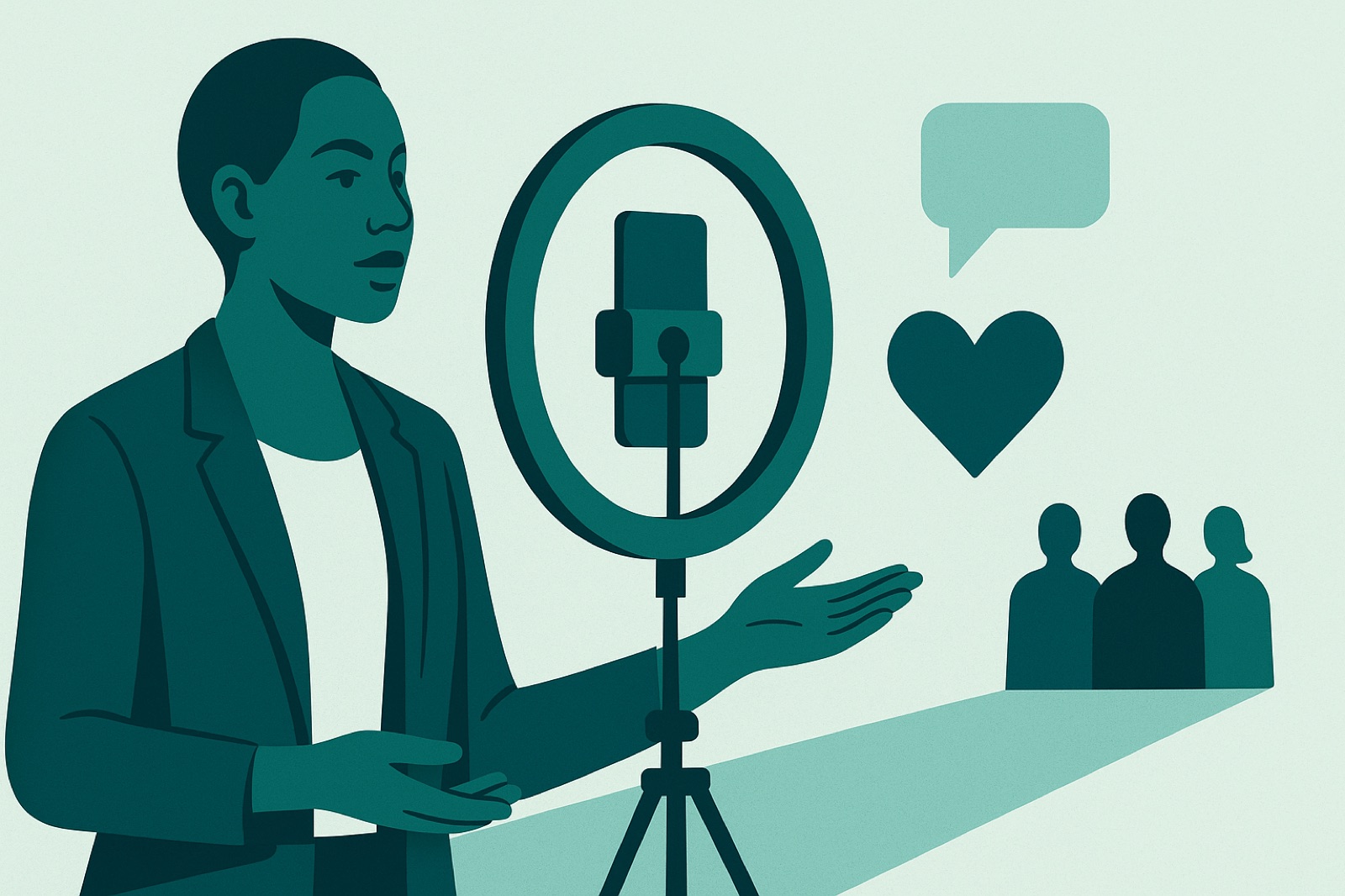
Influencer marketing in South Africa works because it is just a trusted referral. At scale. Instead of your brand shouting at strangers, someone your audience already follows vouches for you. That trust is why it converts. The numbers back it up: 33.6% of South African social media users follow influencers, well above the 22% global average, according to DataReportal and Meltwater. In the US alone, brands will spend around $9.29 billion on influencer marketing in 2025, with the global market tracking past $32 billion, per the Influencer Marketing Hub and Statista. The average return sits near $5.78 for every $1 spent. For a local brand, the smart play is not to chase the biggest celebrity. It is to pick the right micro or nano creator, let them make the content, then put your media budget behind what works. Pieter Groenewald reckons you can prove the concept for around R30,000. This is the full breakdown from our podcast with him. From V8 Media. We have run R2+ billion in client sales since 2018.
The full episode of our podcast sits above. We sat down with Pieter Groenewald, founder of Nfinity, to unpack what influencer marketing really is and whether it is the right fit for your business.
Below the video: every key point from the chat, laid out so you can act on it. Where the market has moved since we recorded, we have updated the numbers to the current 2026 reality.
Here is the thing most business owners get wrong. They think influencer marketing means paying a celebrity a fortune for one post. Wrong. Done right, it is one of the cheapest ways to borrow trust you have not built yet.
What is influencer marketing, really?
Think of it as a trusted referral. Nothing more complicated than that.
Word-of-mouth has always been the most powerful form of advertising. Always. You buy what your mate recommends faster than what an ad tells you to buy.
An influencer is just a mate at scale. Their followers are their tribe, and the size of that tribe roughly tracks their follower count.
Here is the gap it closes. On social media, a customer can follow your brand. But your brand cannot easily follow them back and build a real connection.
So you use the influencer as the bridge. The best way to introduce a brand to a tribe is through one of its own tribe members.
That is the whole idea. You are not buying reach. You are borrowing trust.
Does influencer marketing actually work in South Africa?
Short answer. Yes, and the local appetite is bigger than most owners think.
33.6% of South African social media users follow influencers and online experts, according to DataReportal's figures reported by Meltwater. The global average is 22%. So South Africans are noticeably more tuned in to creators than the rest of the world.
There are tens of thousands of influencers operating in South Africa, per Humanz, the local creator-commerce platform. That is a deep bench. From celebrities with millions of followers down to nano creators with a few thousand.
The category is also growing up. The South African Content Creator Charter launched in 2024, endorsed by the Advertising Regulatory Board. That means clearer rules on disclosure and ethics, which protects your brand when you run a campaign.
And the money tells the story. In the US alone, spend is set to hit around $9.29 billion in 2025, up 14.2% from $8.14 billion in 2024, with the global market tracking past $32 billion, according to the Influencer Marketing Hub and Statista. Spend does not grow like that on a fad.
What problems does it solve for a local brand?
Three big ones. Trust, language, and attention.
First, trust. Most people do not trust brands. Talk to them directly and your message often falls on deaf ears. A creator they already follow gets a hearing your ad never will.
Second, language. South Africa has 11 official languages. By default most marketing defaults to English because it is the safe option.
An influencer can carry your message in the language their tribe actually speaks. That opens a door to an audience you were quietly missing.
Third, attention and engagement. This is where the right creator beats a celebrity. On Instagram, micro-influencers average around 3.86% engagement versus roughly 1.21% for mega-influencers, according to Archive's 2026 engagement data. Nano creators push past 6%.
Smaller audience, but a far higher slice of that audience actually cares. That is why 73% of brands now prefer working with micro and mid-tier creators, according to Later's 2025 influencer marketing report.


The different types of influencers (and why bigger is not better)
People hear "influencer" and picture a Kardashian. That is one type, and usually the worst value.
The tiers break down roughly by follower count, and the trade-off is always the same. More reach, less trust. Less reach, more trust.
| Tier | Rough follower count | Best for | Engagement reality |
|---|---|---|---|
| Nano | Under 10,000 | Hyper-local, high-trust, tight budgets | Highest engagement, often 6%+ on Instagram |
| Micro | 10,000 to 100,000 | Niche communities, best cost-to-trust ratio | Strong, around 3.86% on Instagram |
| Macro | 100,000 to 1 million | Wider reach, category awareness | Lower, engagement starts dropping |
| Mega / celebrity | 1 million+ | Mass reach, big brand launches | Lowest, around 1.21% on Instagram |
For most South African businesses, the sweet spot is nano and micro. Smaller is smarter. You get a tribe that genuinely listens, at a price that does not need board approval.
Chasing a mega-influencer for the follower number is a classic vanity-metric trap. Reach you cannot afford to convert is not reach. It is just an invoice.
Who creates the content? (Stop burning money here)
The biggest mistake brands make is spending a fortune trying to pump out content themselves.
Pieter's rule from the episode is simple. Only 30% to 40% of your effort should go into creating content. The other 60% should go into distributing it.
Most owners flip that. They obsess over making more posts and barely think about getting the good ones seen.
Here is the beauty of influencer marketing. The creator makes the content for you. Half your job, gone.
Then you squeeze that content three ways:
- First, the influencer posts it to their tribe. Free trust, built-in audience.
- Second, once you see it perform, you put your own media budget behind it as a paid ad. You are now scaling content you already know works.
- Third, you fold it into your own content plan. Reuse it on your channels so it keeps earning.
One piece of content, three jobs. That is how you make a single collaboration pay for itself several times over.
This is the same content discipline we push in the hidden truths about user-generated content. Real people making real content beats polished brand ads almost every time.
How do you find the right influencers?
Two routes. The slow way and the smart way.
The slow way is doing it yourself. You have a few names in mind, so you dig through their old content to check they fit your brand and your objective.
It works. But it eats time you probably do not have, and you only see the creators you already knew about.
The smart way is using the right tools. Companies that specialise in influencer marketing keep a database of registered creators, like Humanz here in South Africa.
You feed in a few details about your business and your goal. The platform matches you with a shortlist of suitable creators in minutes, not weeks.
From there it is your call. Work with one creator, or run a few names at once and rotate their content weekly to see who pulls.
Whichever route you pick, vet for fit, not just follower count. A creator whose tribe matches your customer is worth ten who just have big numbers.
What does influencer marketing cost in South Africa?
Less than you fear, if you start smart. The trick is to test before you bet big.
Pieter's number for a proper proof of concept is around R30,000. He splits it like this:
| Spend | Amount | What it does |
|---|---|---|
| Content creation | Around R10,000 | Pays the creator to make the content |
| Media budget | Around R20,000 | Shifts the winning content from organic to paid, so you scale what works |
| Total proof of concept | Around R30,000 | Enough to get real, measurable results before you commit more |
That is the proof-of-concept budget, not the floor for every campaign. Nano creators can cost far less. In South Africa the average nano-influencer post sits around R2,693, according to Humanz's 2025 local benchmark report.
So you can dip a toe for a few thousand Rand, or run a structured R30,000 test that actually tells you something. Either way, you spend small, learn fast, then scale the winner.
Is it the cheapest marketing going? No. But every Rand is measurable, and you walk away with content and insights even if the campaign is only so-so.
Does it really work? How to measure the ROI
Objectives differ, so results differ. What prints money for one brand flops for another.
Everything is measurable. That is the whole point of the proof-of-concept.
Pick a budget. Run the test. Read the numbers. If it pays, scale it. If it flops, you spent a little and learned a lot.
And the upside is real. The average return on influencer marketing sits around $5.78 for every $1 spent, while the best campaigns hit $18 to $20 per $1, according to the Influencer Marketing Hub. A widely cited Tomoson study found 70% of businesses earn at least $2 back for every $1 they put in.
Track the things that matter to your goal. Reach and engagement if you are building awareness. Clicks, leads and sales if you are after revenue. Vanity likes do not pay invoices.
This is the same profit-first thinking we apply to paid media in the most important marketing metric to measure. Measure what moves money, not what feels good.
Where influencer marketing fits your bigger system
Influencer marketing is one channel. It is not the whole machine.
The brands that win do not bet everything on creators. They plug influencer content into a machine where every channel feeds the next.
Here is the simple version. Use creators to build trust and awareness. Take the content that performs and scale it through paid Meta ads, so you are amplifying proven winners instead of guessing.
Then catch the demand you created with Google Ads, where people are actively searching for what you sell. Capture and nurture the leads across email and chat.
That is the same engine behind getting sales from short content, which we break down in how to use Instagram and TikTok to generate sales for free and how to go viral with short-form content.
If you want the whole thing built and run for you, that is exactly what our AI lead generation system does. It plugs creators, ads and follow-up into one machine that turns attention into booked customers.
One creator post is a start. A system is a business.
Frequently asked questions
What is influencer marketing and how does it work?
Influencer marketing is a trusted referral at scale. Your brand does not interrupt strangers. You pay someone their tribe already trusts to recommend you. Word-of-mouth, but wired to an audience. It works because people buy what someone they trust recommends far more readily than what an ad tells them to buy. The influencer acts as a bridge between you and an audience you could not easily reach or build trust with on your own. The creator usually makes the content, posts it to their followers, and you then put media budget behind whatever performs well to scale it.
Does influencer marketing work in South Africa?
Yes, and South Africans engage with influencers more than the global average. 33.6% of South African social media users follow influencers and online experts, compared with a 22% global average, according to DataReportal figures reported by Meltwater. There are tens of thousands of influencers operating locally, per the creator-commerce platform Humanz, ranging from celebrities to nano creators. The space is also maturing, with the South African Content Creator Charter launched in 2024 and endorsed by the Advertising Regulatory Board to set clearer disclosure and ethics rules. For most local brands, the best results come from micro and nano creators whose smaller audiences trust them and engage at much higher rates than big celebrities.
How much does influencer marketing cost in South Africa?
It depends on the creator and the goal, but you can start small. In the episode, Pieter Groenewald suggested around R30,000 for a proper proof of concept, split into roughly R10,000 for content creation and R20,000 for media budget to scale the content that performs. At the lower end, the average nano-influencer post in South Africa costs around R2,693, according to Humanz's 2025 local benchmark report, so you can test with a few thousand Rand. The smart approach is to spend small to prove the concept first, measure the results, and only then increase your budget behind what is clearly working. Every Rand is measurable, which is what makes the test-first method so effective.
What is the difference between micro, macro and mega influencers?
The tiers are defined roughly by follower count, and they trade reach for trust. Nano-influencers have under 10,000 followers and deliver the highest engagement, often above 6% on Instagram, making them ideal for hyper-local, high-trust campaigns on a tight budget. Micro-influencers have 10,000 to 100,000 followers and average around 3.86% engagement on Instagram, offering the best cost-to-trust ratio for niche communities. Macro-influencers (100,000 to 1 million) give wider reach but lower engagement, and mega or celebrity influencers (1 million plus) offer mass reach with the lowest engagement, around 1.21% on Instagram, according to Archive's data. For most South African businesses, micro and nano creators give the best return.
How do I find the right influencer for my brand?
There are two routes. The manual way is to research creators yourself by going through their past content to check they fit your brand and goal, which works but is slow and limits you to creators you already know. The smarter way is to use an influencer platform like Humanz, which keeps a database of registered creators. You enter details about your business and objective, and it matches you with a shortlist of suitable influencers in minutes. Whichever route you take, vet for audience fit rather than follower count alone. A creator whose tribe genuinely matches your ideal customer is worth far more than one who simply has big numbers but a mismatched or disengaged audience.
How do I measure the ROI of influencer marketing?
Start with a proof of concept. Allocate a defined slice of budget, run the campaign, and measure the results against your specific goal before scaling. If it pays back, increase the budget. If it does not, you have lost little and learned a lot. Track the metrics that match your objective: reach and engagement for awareness, and clicks, leads and sales for revenue, rather than vanity likes. The upside can be significant. The average return on influencer marketing is around $5.78 for every $1 spent, with the best campaigns hitting $18 to $20 per $1, according to the Influencer Marketing Hub. Separately, a widely cited Tomoson study found 70% of businesses earn at least $2 for every $1 invested.
Key takeaways
- Influencer marketing is a trusted referral at scale: a creator recommends you to a tribe that already trusts them.
- South Africans are highly receptive: 33.6% follow influencers versus 22% globally, with tens of thousands of creators active locally.
- Bigger is not better. Micro and nano creators engage far higher (3.86% to 6%+ on Instagram) than mega-influencers (around 1.21%).
- Let the creator make the content. Spend 60% of your effort distributing it, not just creating more.
- Use winning content three ways: the influencer's post, your own paid ads, and your content plan.
- Find creators via manual research or a platform like Humanz, and always vet for audience fit over follower count.
- Prove the concept first. Pieter suggests around R30,000 (R10k content + R20k media), or test from a few thousand Rand with nano creators.
- Everything is measurable. Average ROI is about $5.78 per $1, with top campaigns reaching $18 to $20 per $1.
- Influencer content is one channel. Plug it into Meta ads, Google Ads and follow-up to build a real lead engine.