Most founders treat customer acquisition like a lottery. They run ads for three weeks, see nothing, and move on. The Top 1% build systems. Not 100% control, because that does not exist. But 80% control, which is infinitely better than hoping word of mouth saves you.
80% control means this. You know that R10,000 on Meta generates roughly R50,000 in revenue. So you can plan. You can order stock. You can hire. You can forecast without guessing.
That is the difference. Not smarter. Not luckier. Just a proper system.
Three things that actually create demand
Before channels. Before creative. Before ad spend. You need three things working.
If any one of them is missing, more ad spend just burns faster.
1. Unique positioning
If there are five brands selling basically the same thing at roughly the same price, a customer has a 20% chance of choosing you. That means your customer acquisition cost (CAC) goes up because you are fighting for attention against four other options.
Narrow it. "Skincare for sensitive skin" beats "skincare." "Wireless headphones for runners" beats "wireless headphones." The more specific you are, the less you compete on price.
You do not need a revolutionary product. You need a unique angle that removes the comparison.
2. Trust
Real reviews beat generic five-star walls. Real means faces, photos, verified buyer badges, and specific details. A wall of identical stars tells every online shopper: fake.
Put reviews near the buy button. Not buried at the bottom. Right where the decision happens.
3. Risk removal
Takealot dominates partly because returns are frictionless. You do not have to go that far. But you do need to answer the question running in every customer's head: what if I regret this?
Clear return policy. Shipping timelines. Responsive support. Detailed product photos. Every answered question is one less reason not to buy.
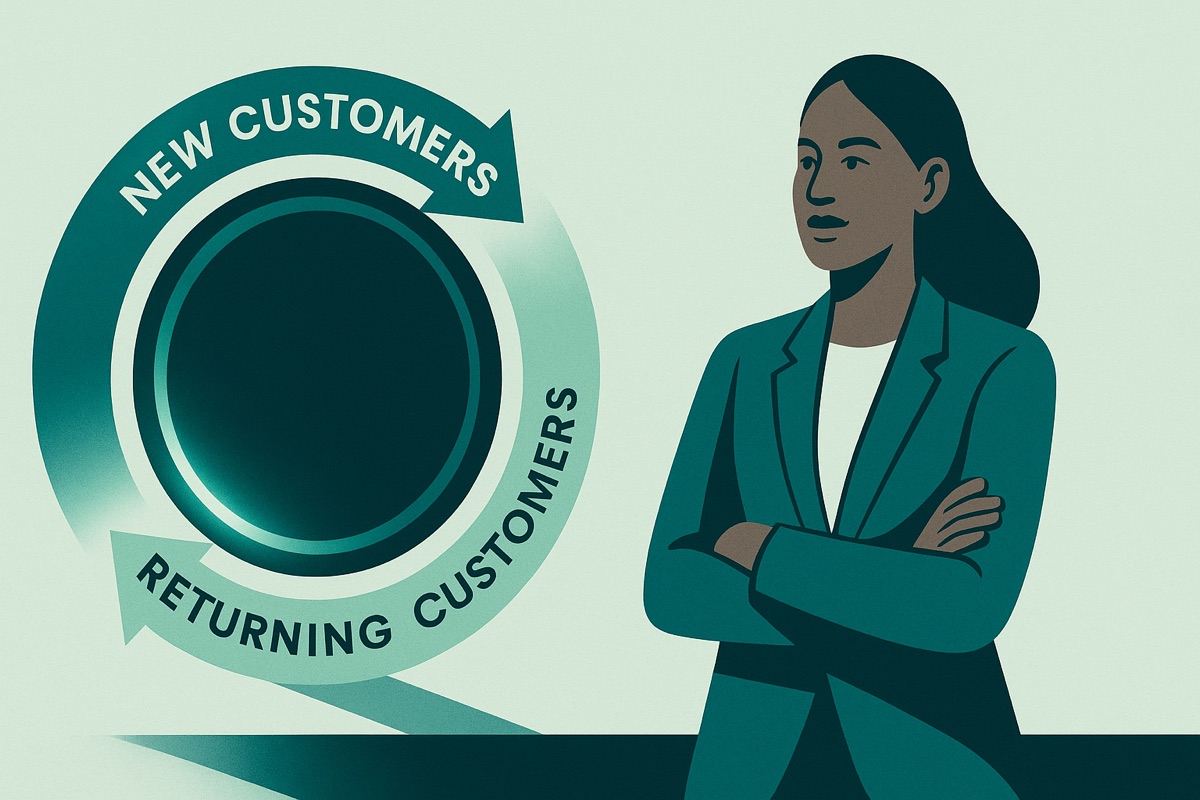
The Acquisition + Retention Engine
Acquire once. Keep forever. The flywheel gains speed.
The 90-Day Channel Test — Don't Quit Before This
Most founders quit at day 21. The compound phase starts at day 61. Give it 90 days with real execution before you judge.
Which channel first
The ideal is running Meta and Google together. Blended CAC drops in 65 to 70 percent of cases. Google catches people searching. Meta builds awareness before they search. Together they cover the full customer journey.
But if your budget is limited, you need to pick one. Minimum R10,000 per month to test a channel properly. Below that you are just burning cash without generating enough data to decide anything.
Two questions to pick your first channel.
Is there search volume? Check Google Trends. If you are seeing 5,000 or more searches per month in South Africa for what you sell, start with Google. Intent already exists. Capture it.
If search volume is low, start with Meta. You will need to create awareness before you can capture it.
What is your price point? Products above R2,500 tend to do better on Google first. Higher price means more consideration and more research before buying. Products under R2,500 tend to do better on Meta first. Lower friction, creative-led, faster to convert.
Pick one. Test it for 90 days. Only add a second channel once the first is stable.
The 90-day rule
Most founders test a channel for three or four weeks, see nothing, and quit. Then they try the next channel. Then the next.
That is not testing. That is spending.
Here is why 90 days matters. In the first 30 days you are figuring out the basics. What offer resonates? What creative format works? What audience converts? In the second 30 days you iterate on what you learned. In the third 30 days you run a more mature system and measure whether it actually produces the economics you need.
Quit at 30 days and you never reach the phase where things compound. You just reset to zero on a new platform and repeat the mistake.
The exception. If you tested three different offers, at least ten pieces of creative, ran 90 days with proper execution, and performance is still nowhere close to target. Then it is fair to move on. But most founders never actually do that work before quitting.
Better. More. New. In that order.
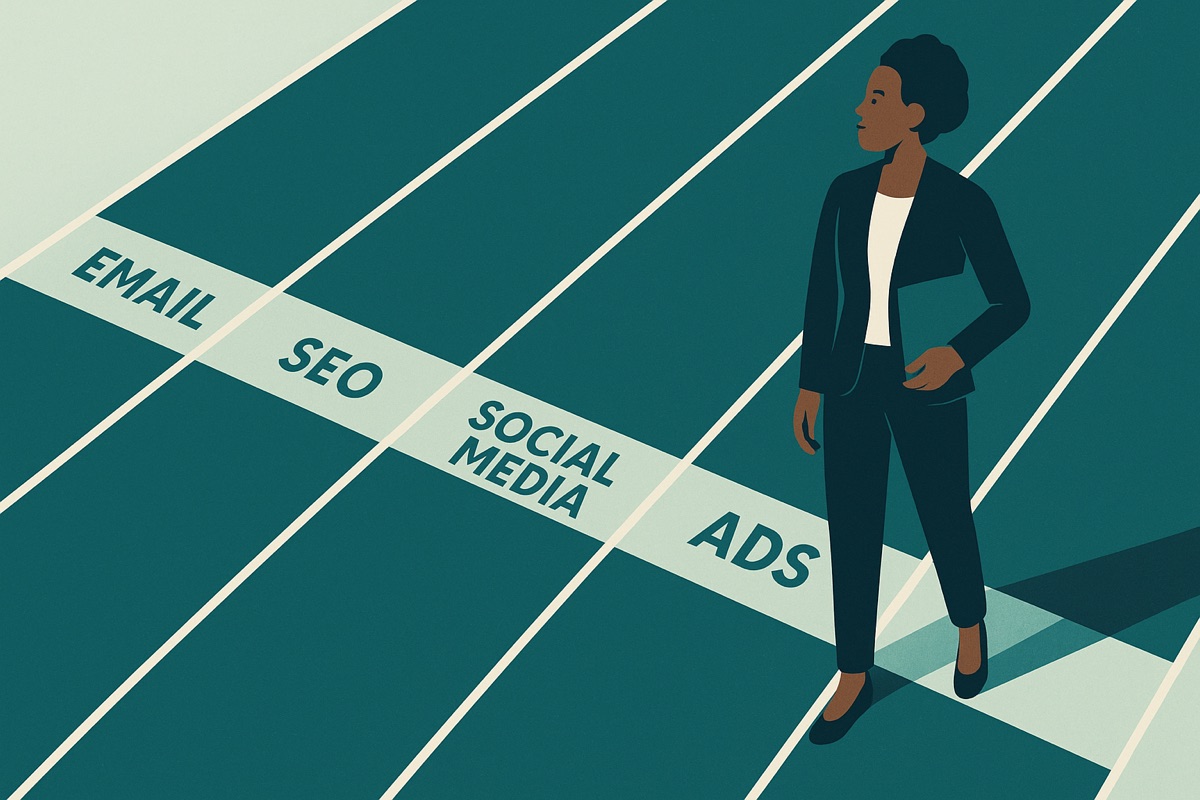
This is the scaling sequence. Follow it every time, without exception.
Better first. Meta not hitting 5X ROAS? Before you add Google or TikTok, improve Meta. Test more creative. Fix the ad-to-page match. Tighten the offer. Improving what you have is faster and cheaper than starting from scratch somewhere new.
More second. Once it is working at target economics, scale budget. If Meta is producing consistent 5X ROAS at R20,000 a month, move to R30,000 on Meta before you add a new channel. More of what works beats new experiments.
New third. Only add a channel after better and more are genuinely exhausted. If Meta is maxed at R50,000 and performance drops when you push higher, now it makes sense to add Google.
Jump to new too early and you end up with three channels running at mediocre results instead of one channel running great. Three mediocre channels are harder to manage and more likely to burn cash.
The repeat-purchase flywheel
Finding customers is only half the job. Keeping them is where the real money is.
A previous customer costs almost nothing to reach. No CAC. No cold audience. They already know you. They already trust you. They just need a reason to come back.
Email and SMS done properly drive up to 25% of total revenue. About 15% of that is repeat purchases. That is revenue at near-zero acquisition cost. Compare that to paying R150 to R200 or more per new customer through paid media, and the maths become obvious.
The mechanics. Abandoned cart: four to five messages over three to five days. First email is a reminder. Second is trust proof. Third is your unique story. Fourth is a small incentive, free shipping or a modest discount, only after you have tried to convert at full price.
For existing customers: segment by behaviour. Someone who bought three months ago gets a different message than someone who bought three weeks ago. Send relevant content and they keep buying. Spam them and they unsubscribe and you lose your cheapest revenue channel.
Payment is not an afterthought
Payment options directly affect conversion. If your preferred method is not available, some customers find an alternative. A surprising number just leave.
The optimal setup in South Africa is five gateways: Stitch as primary (99.995% uptime, Apple Pay, Google Pay, Capitec Pay), PayFast as backup, and three buy-now-pay-later options: PayJustNow, PayFlex, and HappyPay.
BNPL converts customers who cannot or will not pay the full amount today. A R1,500 product becomes four payments of R375. We have seen conversion rates lift 15 to 25 percent when BNPL is available. The higher transaction fee disappears in the additional sales volume.
The one line to remember
The Top 1% do not hope for customers. They build systems they control. 80% control means predictable revenue, scalable ad spend, and a repeat-purchase loop that makes the business cheaper to grow every month. That is the machine.
You now know what creates demand, how to pick a channel, how to test it properly, and how to keep the customers you already paid to acquire. Lesson 6 covers the money side: how to manage cash so scaling does not break the business.
Want us to build this system for you?
We have run this exact acquisition playbook across hundreds of South African brands. If you would rather have a team that has done it before, that is what we do.
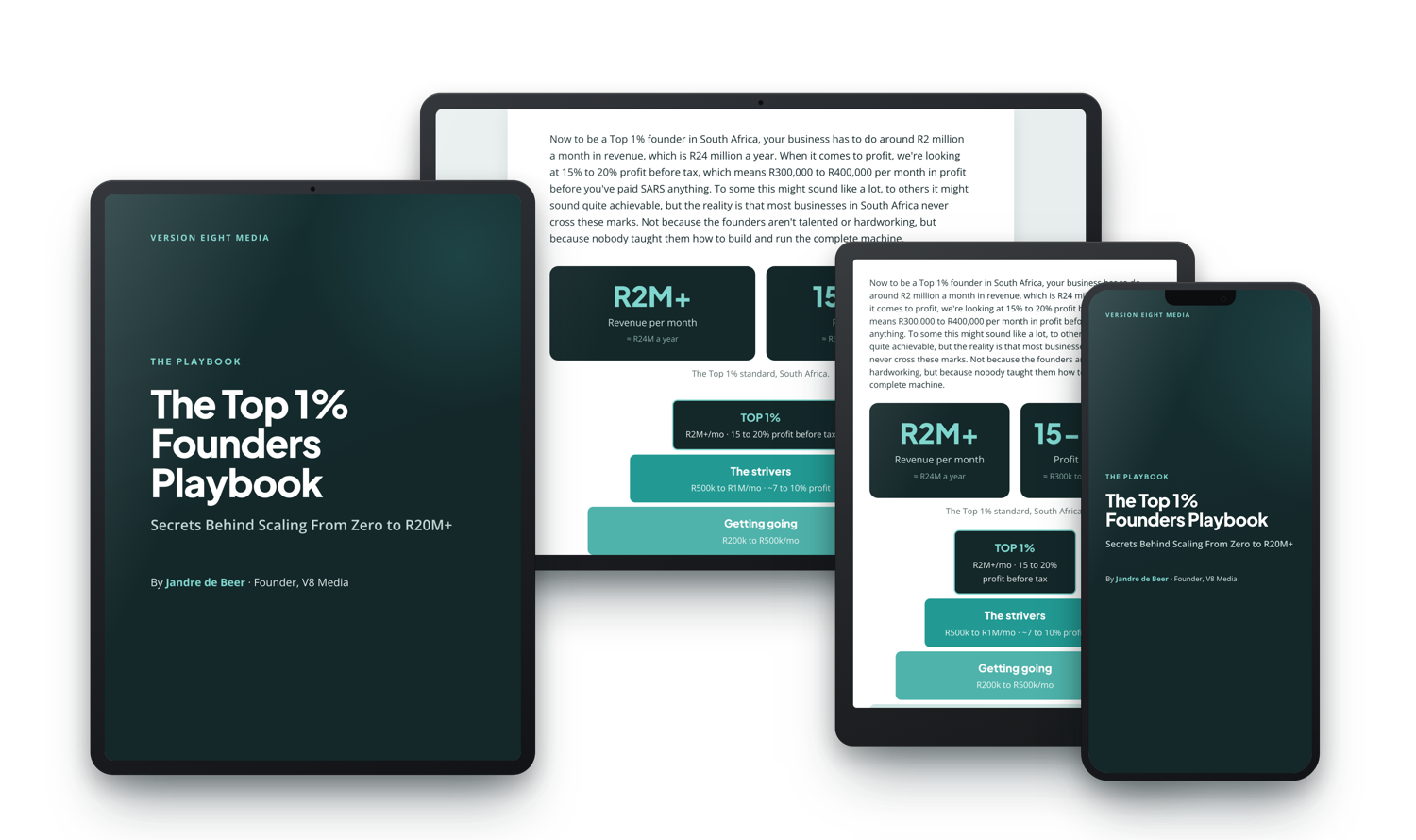
Get the complete playbook
All 9 lessons in one beautifully designed guide. Yours to download and keep.
Download your full guide ↓